Indoor-Outdoor Cleaning: How Robots Adapt to Different Floors
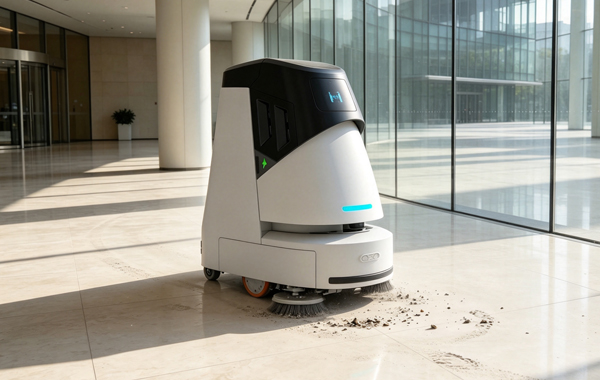
True integrated cleaning means the machine understands every floor — not asking the scene to adapt to the machine.
The Challenge of Diverse Floor Materials
Outdoor areas typically feature asphalt, concrete and stone paving with joints and abundant dust and grit, requiring stronger brush pressure and suction. Indoors, tile and epoxy floors are smooth and appearance-sensitive, where aggressive scrubbing may leave marks or damage surfaces.
Thresholds, ramps and carpets at indoor-outdoor transitions also place extra demands on chassis clearance and cleaning strategy.
Adaptive Brushes and Suction: Matching the Surface
Odaoo robots adjust brush pressure and speed automatically by floor type: firmer scrubbing for rough outdoor surfaces to lift embedded dust, and reduced pressure with optimized suction contact on smooth indoor floors to protect the surface.
Suction is dynamically tuned with sealed intake design — stronger outdoors for grit, quieter and more efficient indoors — balancing cleaning results with user experience.
Edge Cleaning: The Last Centimeter
Corners, column bases and equipment edges are where debris accumulates. High-precision positioning and edge algorithms let the brush run as close to boundaries as possible, with side brushes guiding debris into the intake to reduce manual touch-ups.
Around obstacles, the sensing system plans detours and re-cleaning paths to avoid missed spots.
The Value of Seamless Indoor-Outdoor Operation
For venues with both indoor and outdoor areas — such as mixed-use complexes, campuses and transport hubs — a unified cleaning robot reduces equipment count and management complexity, enabling continuous operation and consistent cleaning quality.
Through systematic optimization of brushing, suction and edge cleaning, Odaoo robots intelligently adapt to diverse surfaces, offering a reliable path to unified indoor-outdoor cleaning.